
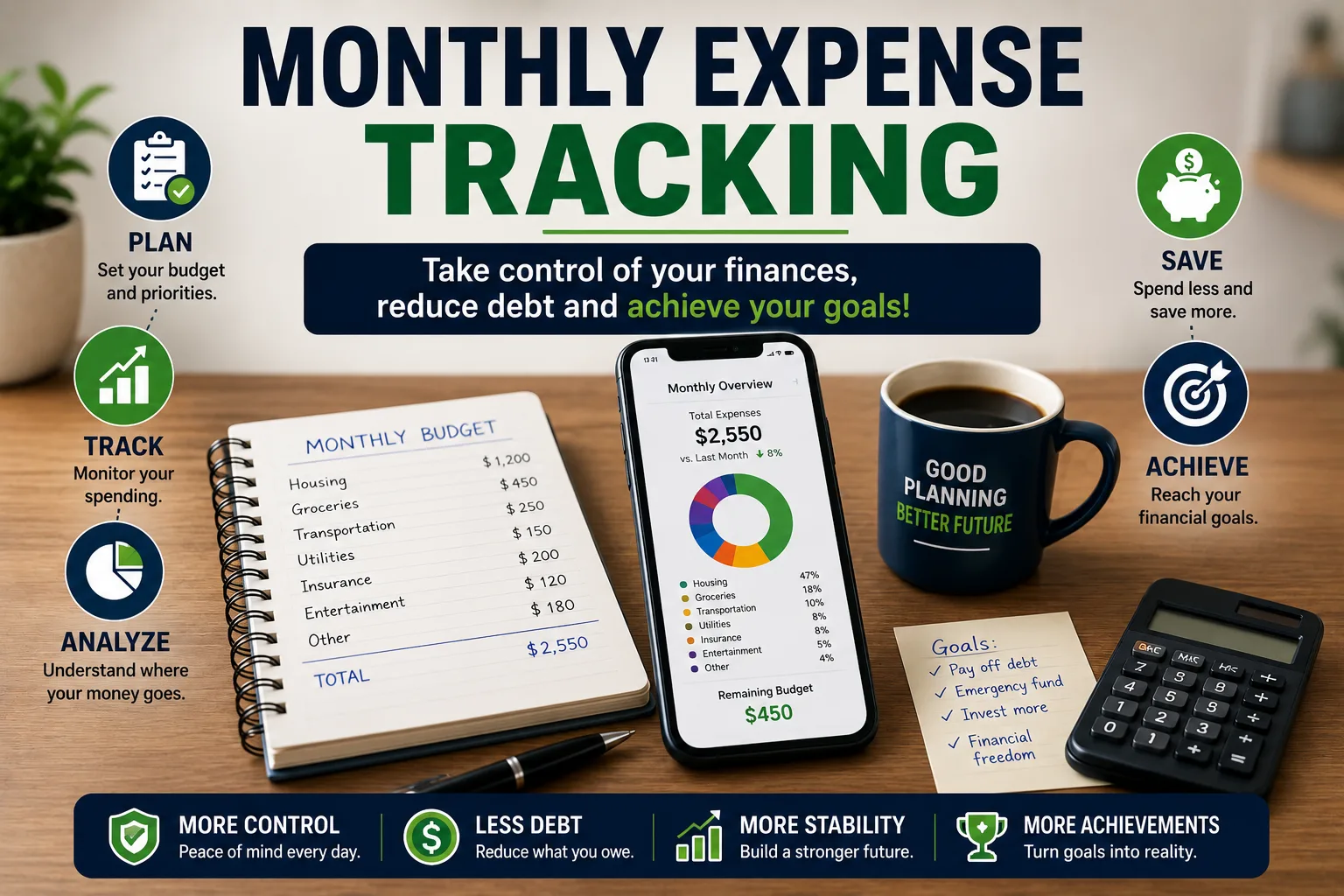
Monthly Expense Tracking has become one of the fastest-growing financial search topics among U.S. consumers, investors, and businesses looking to reduce debt exposure and improve long-term financial security.
Rising inflation, higher interest rates, and growing dependence on credit cards have transformed budgeting from a basic personal habit into a critical financial strategy.
Across the United States, households are dealing with increasing living expenses while carrying record levels of revolving credit debt. This combination creates financial pressure, especially when spending habits are not monitored consistently.
Financial institutions and investors closely analyze consumer debt behavior because it directly affects lending markets, credit risk, and overall economic confidence.
Companies operating in banking, fintech, insurance, and investment management increasingly rely on spending analytics to evaluate consumer reliability. Expense tracking is no longer only a personal finance issue. It now impacts creditworthiness, asset protection, compliance assessments, and investment decisions across multiple industries.
For individuals, managing monthly expenses can prevent long-term financial damage. For corporations and institutional investors, consumer spending patterns reveal broader economic vulnerabilities. Understanding how budget control affects financial systems helps explain why this topic generates strong SEO competition and high AdSense CPC rates in the U.S. finance market.
How Monthly Expense Tracking Impacts Asset Management
Asset management is often associated with investment portfolios, retirement planning, and institutional wealth strategies. However, personal spending behavior also plays a major role in preserving and growing financial assets.
When consumers fail to manage recurring expenses, they frequently rely on high-interest credit products. Over time, expensive debt obligations can erode emergency savings, retirement accounts, and long-term investment opportunities.
Banks and lenders use spending patterns to estimate repayment reliability. Consumers with disciplined financial habits are statistically less likely to default during economic downturns. This lowers lending risk and strengthens financial market stability.
For businesses, expense management directly affects operational resilience. Companies with strong cost controls often preserve liquidity more effectively during inflationary periods and market volatility. Investors commonly view efficient financial management as a sign of sustainable leadership and responsible corporate governance.
The Relationship Between Debt Management and Credit Recovery
One of the biggest consequences of poor budgeting is the accumulation of high-interest debt. Credit cards remain one of the most expensive forms of consumer borrowing in the United States. When balances grow faster than income, many consumers become trapped in cycles of minimum payments and escalating interest charges.
This pattern negatively affects credit scores, borrowing power, and long-term financial opportunities. In the U.S. financial system, poor credit can increase insurance premiums, reduce mortgage approval chances, and limit access to premium financial products.
Consumers searching for solutions related to credit card debt relief are often trying to recover from prolonged financial stress. Debt settlement or consolidation may reduce immediate pressure, but sustainable recovery typically requires long-term expense control and budgeting discipline.

Without changing spending habits, many borrowers eventually recreate the same financial problems after completing debt restructuring agreements. This is why financial advisors increasingly recommend budget stabilization before pursuing consolidation or settlement programs.
According to the Consumer Financial Protection Bureau, revolving credit debt remains one of the leading drivers of long-term financial instability for American households.
Source: Consumer Financial Protection Bureau
Why Investors Monitor Consumer Spending Trends
Large investment firms and financial analysts carefully monitor consumer spending patterns because they provide insight into broader economic conditions. Retail spending, household debt levels, and credit delinquency rates often serve as indicators of future market performance.
When consumers reduce discretionary spending due to financial pressure, industries such as retail, travel, hospitality, and consumer technology frequently experience slower growth. Investors use this data to adjust portfolio strategies and manage market exposure.
Expense management trends also influence fintech valuations. Companies offering budgeting software, debt management platforms, and financial wellness tools have experienced rapid growth because demand for financial control solutions continues rising internationally.
From an investment perspective, consumers who actively monitor spending behavior are considered financially healthier participants in the credit ecosystem. This contributes to lower default risks and stronger economic confidence.
Compliance and Legal Risks Associated With Excessive Debt
Debt-related financial stress can create serious legal and compliance concerns. Financial institutions operating in regulated industries must maintain transparent lending practices and responsible credit evaluation procedures.
Regulators across the United States have increased oversight on consumer lending, particularly regarding hidden fees, aggressive marketing tactics, and predatory interest structures. Companies that fail to comply with disclosure laws may face litigation, regulatory penalties, and reputational damage.
Consumers should also understand the legal consequences of unmanaged debt. Depending on state laws and financial circumstances, unpaid obligations can result in collection lawsuits, wage garnishment, or asset seizure.
Proper monthly expense management reduces exposure to these risks by helping individuals maintain repayment consistency and avoid long-term delinquency.
The Federal Trade Commission regularly warns consumers about fraudulent debt relief companies that promise unrealistic financial results while charging excessive upfront fees.
Source: Federal Trade Commission
How Inflation and Interest Rates Increase Financial Pressure
Inflation continues reshaping consumer financial behavior across the United States. Rising costs for housing, transportation, healthcare, groceries, and utilities place additional pressure on household budgets.
At the same time, higher Federal Reserve interest rates make borrowing significantly more expensive. Credit card balances, personal loans, and adjustable-rate financing products become increasingly difficult to manage during high-rate environments.
Consumers who fail to monitor recurring expenses often underestimate how inflation impacts long-term budgeting. Small price increases across multiple categories can eventually create substantial financial imbalances.
This explains why budgeting tools and expense management strategies remain highly searched financial topics with strong SEO and AdSense performance. Economic uncertainty consistently increases demand for educational content focused on debt reduction and financial stability.
Effective Strategies for Managing Monthly Expenses
Successful expense tracking usually begins with financial visibility. Many consumers struggle because they do not consistently monitor recurring spending patterns.
One effective strategy involves separating expenses into fixed and variable categories. Fixed costs may include mortgage payments, rent, insurance, utilities, and loan obligations. Variable expenses often include dining, entertainment, subscriptions, and discretionary shopping.
Financial advisors also recommend identifying “hidden expenses.” These are recurring charges that appear small individually but create meaningful financial impact over time. Streaming services, app renewals, and impulse online purchases are common examples.
Another important strategy involves prioritizing high-interest debt repayment before expanding discretionary spending. Reducing expensive debt obligations often improves financial flexibility faster than pursuing aggressive investment strategies while carrying large balances.
Automated savings systems may also support long-term stability. Even modest emergency reserves can reduce dependence on expensive credit during unexpected events such as medical bills or temporary income loss.
The Psychological Effects of Financial Instability
Debt problems rarely affect only finances. Financial stress frequently contributes to anxiety, reduced productivity, sleep disruption, and relationship tension.
Research from financial wellness organizations suggests prolonged financial insecurity may negatively affect decision-making quality. Under stress, consumers are more likely to make impulsive borrowing decisions or accept unfavorable financial agreements.
This creates a cycle where emotional pressure leads to poor financial choices, which then increase debt exposure further.
Expense tracking and budgeting can improve psychological stability because predictable financial planning reduces uncertainty. Consumers who clearly understand their monthly obligations often experience greater confidence and improved long-term planning capacity.
Businesses are also recognizing the connection between financial wellness and workforce productivity. Some employers now provide financial education programs to help employees manage debt and budgeting challenges more effectively.
Digital Banking and AI-Powered Expense Management
Technology continues transforming how consumers manage spending behavior. Mobile banking applications, AI-driven budgeting software, and automated expense tracking platforms now provide real-time financial insights.
Artificial intelligence systems can categorize purchases, identify unusual spending patterns, and generate predictive budgeting recommendations. These technologies improve financial visibility and may help reduce impulsive spending behavior.
Fintech companies increasingly compete in the financial wellness industry because demand for digital money management tools continues growing internationally.
However, consumers should remain cautious regarding cybersecurity and data privacy concerns. Financial applications often collect highly sensitive information, including transaction history, account balances, and behavioral spending data.
Before using financial management platforms, individuals should carefully review privacy policies, security protections, and regulatory compliance standards.
Why Financial Literacy Is More Important Than Ever
Financial literacy plays a critical role in long-term economic stability. Many Americans receive limited education regarding budgeting, credit management, or debt risk evaluation.
As financial products become more complex, understanding interest rates, repayment structures, and investment risks becomes increasingly important. Consumers with limited financial knowledge may become vulnerable to predatory lending practices or unrealistic financial promises.
Educational content focused on budgeting and debt management therefore attracts strong organic search demand across both national and international financial markets.
High-CPC finance keywords perform exceptionally well because banks, lenders, insurance companies, fintech firms, and investment platforms compete aggressively for financially engaged audiences.
For publishers and content creators, SEO-focused financial articles that combine practical education with compliance-safe information can generate consistent organic traffic and strong advertising monetization potential.
Conclusion
Monthly Expense Tracking is no longer a simple budgeting habit. It has become a critical financial strategy affecting debt recovery, credit stability, asset management, legal exposure, and investor confidence.
Consumers facing credit card debt often focus only on immediate solutions such as settlement or consolidation. While those strategies may provide temporary relief, sustainable financial recovery usually depends on disciplined budgeting and long-term spending control.
For investors and financial institutions, consumer spending behavior remains one of the most important economic indicators. Debt trends influence lending strategies, risk assessments, and broader market expectations.
As inflation, digital banking, and global credit dependency continue evolving, responsible expense management will likely become even more important for both individuals and businesses in the years ahead.

My name is CAPRA CHRINO, and I am an enthusiast of the online universe. Since a very young age, I have been fascinated by the way the internet connects people, ideas, and opportunities.