
Open bank account without SSN might seem impossible when you first arrive in the United States, but it’s actually a achievable goal with the right knowledge and preparation.
Every year, millions of immigrants, international students, and visa holders face this exact challenge. You need a bank account to receive payments, pay bills, and build financial credibility, yet most banks immediately ask for a Social Security Number that you don’t have yet.
The good news? Federal regulations allow you to open bank account without SSN using alternative identification methods. This comprehensive guide reveals exactly which banks accept non-SSN applications, what documents you need, and the step-by-step process to secure your first American bank account within days of arrival.
Understanding SSN: What It Is and Why Banks Request It
Before learning how to open bank account without SSN, it’s crucial to understand what a Social Security Number represents and why banks traditionally require it for account opening.
Select one of the topics below to access detailed and verified information.
Bolsa Família 2026 Payment CalendarBolsa FamíliaAuxilio Brasil ApplicationWhat is a Social Security Number?
A Social Security Number (SSN) is a unique nine-digit identifier issued by the U.S. Social Security Administration to track individuals for social security benefits and taxation purposes. The format appears as XXX-XX-XXXX, such as 123-45-6789.
Who Receives an SSN:
- U.S. citizens automatically receive SSNs at birth
- Legal permanent residents (green card holders)
- Temporary workers with valid work authorization
- Students with valid work permits
- Spouses of workers on certain visa types
Who Cannot Get an SSN:
- Tourist visa holders (B-1/B-2)
- Many student visa holders without work authorization
- Investors on E-2 visas (in some cases)
- Recent arrivals waiting for work authorization approval
- Undocumented individuals
The SSN serves multiple purposes beyond banking: tax filing, employment verification, credit reporting, and access to government services. This multi-functional nature explains why financial institutions rely heavily on SSNs for customer identification.
Why Banks Traditionally Require SSN
Banks request Social Security Numbers for several regulatory and business reasons that go beyond simple identification.
Know Your Customer (KYC) Compliance: Federal law requires banks to verify customer identity to prevent money laundering and terrorist financing. SSNs provide a standardized method for this verification process.
Credit History Access: Banks use SSNs to check credit reports from Experian, Equifax, and TransUnion. This information helps them assess financial risk and determine account terms.
Tax Reporting Requirements: Banks must report interest earnings and other financial activities to the IRS using customers’ SSNs. This reporting is mandatory for compliance with federal tax laws.
Select one of the topics below to access detailed and verified information.
Bolsa Família 2026 Payment CalendarBolsa FamíliaAuxilio Brasil ApplicationFraud Prevention: SSNs help banks verify that applicants are who they claim to be, reducing identity theft and fraudulent account openings.
Automated Processing: Most banking systems are designed around SSN-based verification, making it the fastest and most efficient method for account approval.
Understanding these requirements helps explain why some banks hesitate to open bank account without SSN, but federal regulations provide alternative pathways that accomplish the same compliance goals.
Legal Alternatives to SSN for Banking
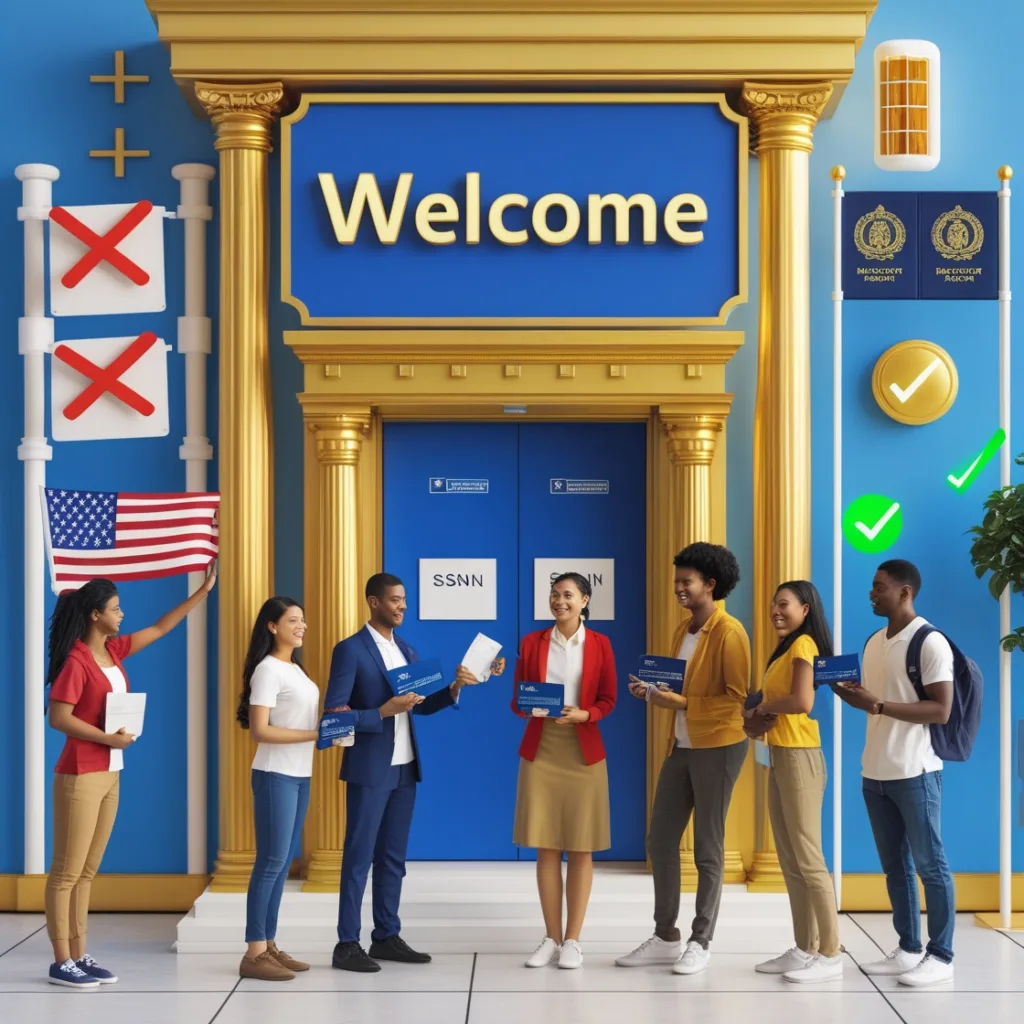
Federal banking regulations explicitly allow alternative identification methods when customers cannot provide Social Security Numbers, making it completely legal to open bank account without SSN.
Individual Taxpayer Identification Number (ITIN): Issued by the IRS for tax filing purposes, ITINs function similarly to SSNs for banking identification. Format: 9XX-XX-XXXX (always begins with 9).
Passport-Based Identification: Foreign passports combined with visa documentation provide sufficient identity verification for many banks.
Consular Identification Cards: Some banks accept identification cards issued by foreign consulates, particularly for customers from countries with established banking relationships.
Driver’s License and State ID: While not primary identification for federal purposes, state-issued IDs support identity verification when combined with other documentation.
The key is understanding that banks can and do open bank account without SSN when customers provide equivalent identification that meets federal compliance requirements.
12 Major Banks That Let You Open Account Without SSN
These financial institutions have established policies and procedures specifically designed to help you open bank account without SSN, using alternative documentation methods.
National Banks with No-SSN Policies
Bank of America Bank of America has one of the most immigrant-friendly policies among major national banks. They accept ITINs, foreign passports, and consular identification cards from Mexico, El Salvador, Guatemala, and Honduras.
Requirements to open bank account without SSN:
- Valid foreign passport with U.S. visa
- Proof of U.S. address (utility bill, lease agreement)
- Initial deposit ($25 minimum for basic checking)
- ITIN (preferred but not always required)
Account options include basic checking, savings, and even credit products for qualified customers. Spanish-speaking staff available at most locations.
Chase Bank Chase allows customers to open bank account without SSN in select markets with significant immigrant populations. Their policy varies by location, with more flexibility in states like California, Texas, Florida, and New York.
Documentation accepted:
- Foreign passport with valid U.S. visa
- ITIN or foreign tax identification number
- Two forms of address verification
- Minimum opening deposit ($25-100 depending on account type)
Chase offers specialized services for international customers, including global money transfers and multi-currency support.
Wells Fargo Wells Fargo’s “Opportunity Checking” account is specifically designed for customers who cannot meet traditional banking requirements, including those who want to open bank account without SSN.
Key features:
- No overdraft fees
- No minimum balance requirement
- Accepts ITIN or foreign passport for identification
- Bilingual customer service available
- Debit card and online banking included
Wells Fargo also provides financial education resources in multiple languages to help new customers navigate the U.S. banking system.
Citibank Citibank’s global presence makes them particularly accommodating for international customers seeking to open bank account without SSN. Their “Access Account” requires no credit check and minimal documentation.
Accepted identification:
- Foreign passport from any country
- ITIN, foreign tax ID, or consular ID
- Proof of U.S. address (can be temporary)
- Opening deposit as low as $25
Citibank offers international wire transfers, multi-currency accounts, and connections to banking services in customers’ home countries.
Regional Banks and Credit Unions
Capital One Capital One’s 360 Checking account allows customers to open bank account without SSN using alternative identification methods. Their online application process is particularly streamlined for non-SSN customers.
Benefits include:
- No monthly fees or minimum balances
- Early direct deposit
- Mobile banking with check deposit
- ATM fee reimbursements at partner locations
Capital One also provides credit building tools for customers looking to establish U.S. credit history.
Alliant Credit Union Credit unions often have more flexible policies than traditional banks, and Alliant is particularly welcoming to members who need to open bank account without SSN.
Membership requirements:
- $5 membership fee and share account
- Foreign passport or ITIN accepted
- U.S. address verification
- No minimum balance on checking accounts
Alliant offers higher interest rates on savings accounts and lower fees than many traditional banks, plus access to a nationwide ATM network.
Navy Federal Credit Union While primarily serving military members and families, Navy Federal allows eligible customers to open bank account without SSN using military-issued identification numbers or foreign passports for qualifying dependents.
Services include:
- No monthly fees on basic accounts
- Competitive loan rates
- International banking services
- Multiple language support options
Pentagon Federal Credit Union (PenFed) PenFed accepts applications from customers who want to open bank account without SSN, particularly for military families and federal employees with alternative identification.
Account features:
- Free checking and savings accounts
- ATM fee refunds nationwide
- Online and mobile banking
- International wire transfer services
Online Banks and Digital Solutions
Chime Chime’s online banking platform allows some customers to open bank account without SSN using ITIN and foreign passport documentation. Their mobile-first approach appeals to younger immigrants comfortable with digital banking.
Digital banking features:
- No monthly fees or minimum balances
- Early paycheck access
- Automatic savings programs
- Extensive ATM network through partnerships
Varo Bank Varo offers online account opening for customers who cannot provide SSN but have ITIN or other acceptable identification. Their approval process is faster than traditional banks.
Account benefits:
- High-yield savings options
- No overdraft fees
- Cash advance features
- Mobile check deposit
Current Current’s teen and young adult focus makes them particularly open to customers who need to open bank account without SSN, especially international students and young immigrants.
Services include:
- Instant spending notifications
- Round-up savings programs
- No hidden fees
- Parental controls for younger users
Required Documentation to Open Bank Account Without SSN
Success in your efforts to open bank account without SSN depends heavily on having the correct documentation prepared in advance.
Primary Identification Documents
Individual Taxpayer Identification Number (ITIN) An ITIN is the strongest alternative to an SSN for banking purposes. If you don’t have one yet, consider applying through the IRS before attempting to open bank accounts.
ITIN application requirements:
- Form W-7 (Application for Individual Taxpayer Identification Number)
- Federal tax return or letter from authorized IRS agent
- Original identification documents or certified copies
- Processing time: 7-11 weeks
Foreign Passport with Valid Visa Your foreign passport combined with your U.S. visa provides comprehensive identity verification that most banks accept when you want to open bank account without SSN.
Ensure your documentation includes:
- Unexpired foreign passport
- Valid U.S. visa stamp or approval notice
- I-94 arrival/departure record
- Any visa extension or status change documentation
Consular Identification Cards Several banks accept consular identification cards issued by foreign governments to their citizens living in the United States.
Most commonly accepted cards:
- Mexican Consular ID (Matrícula Consular)
- Guatemalan Consular ID
- Salvadoran Consular ID
- Colombian Consular ID
Contact your country’s consulate for application procedures and requirements for obtaining consular identification.
Proof of Address Requirements
Banks need to verify your U.S. address as part of federal compliance requirements when you open bank account without SSN.
Acceptable Address Documentation:
- Utility bills (electric, gas, water, cable, internet)
- Lease agreement or mortgage statement
- Cell phone bills from major carriers
- Bank statements from another institution
- Government correspondence (IRS, state agencies)
- Insurance statements (auto, health, renters)
Address Documentation Tips:
- Documents must be dated within 60-90 days
- Your name must appear exactly as on your ID
- Temporary addresses are often acceptable
- Some banks accept mail forwarding services
If You Don’t Have Traditional Address Proof:
- Letter from landlord on official letterhead
- Notarized affidavit from someone you live with
- Hotel bills for extended stays
- Mail from government agencies or employers
Additional Supporting Documents
Some banks may request supplementary documentation to strengthen your application to open bank account without SSN.
Employment Documentation:
- Offer letter from U.S. employer
- Pay stubs from current job
- I-20 form for students
- Employment authorization document (EAD)
Financial History:
- Bank statements from your home country
- Letter of good standing from foreign bank
- Proof of income or financial support
- Investment account statements
Reference Letters:
- Letter from current landlord
- Employment reference letters
- Academic institution verification
- Community organization references
Having comprehensive documentation ready before visiting the bank significantly increases your chances of successfully opening an account on your first attempt.
Step-by-Step Process to Open Your First US Bank Account
This systematic approach maximizes your success rate when attempting to open bank account without SSN at any financial institution.
Before You Visit the Bank
Research Bank Policies Not all branches of major banks may be familiar with no-SSN policies. Call ahead to confirm that your chosen location can process applications to open bank account without SSN.
Questions to ask:
- Do you accept ITIN or foreign passport for account opening?
- Which branch manager or specialist handles no-SSN applications?
- What is the minimum opening deposit required?
- Are there monthly fees or minimum balance requirements?
- How long does the approval process typically take?
Prepare Documentation Package Organize all required documents in a folder with copies of everything. Banks may need to photocopy documents, and having copies shows your preparation and seriousness.
Choose Account Type Basic checking accounts are easiest to approve when you want to open bank account without SSN. Avoid applying for premium accounts or credit products during your initial visit.
Plan Your Visit Schedule appointments during off-peak hours when staff have more time to review non-standard applications. Tuesday through Thursday mornings are typically less busy than Mondays, Fridays, or lunch hours.
At the Bank: What to Expect
Initial Conversation Clearly explain that you want to open bank account without SSN using alternative identification. Mention specific documents you’ve brought and any research you’ve done about their policies.
Document Review Process Bank staff will examine your identification documents and may need to consult with managers or call verification departments. This process can take 30-60 minutes, so plan accordingly.
Application Completion Fill out all forms completely and accurately. Any inconsistencies between your verbal statements and written application can cause delays or denials.
Identity Verification Banks may use alternative verification systems when you open bank account without SSN. This might include database searches using your passport number, ITIN, or other identification.
Initial Deposit Have your opening deposit ready in cash or cashier’s check. Personal checks from foreign banks are typically not accepted for new account funding.
After Opening: Next Steps
Confirm Account Details Verify that all account information is correct, including your name spelling, address, and contact information. Errors can cause problems with future services.
Set Up Online Banking Register for online and mobile banking services immediately. This provides account access while you wait for debit cards and checks to arrive by mail.
Understand Fees and Terms Review all account agreements carefully. Ask questions about any fees, minimum balances, or restrictions that might affect your account status.
Plan for Credit Building Opening your first bank account is the foundation for building U.S. credit history. Ask about secured credit cards or other credit-building products you might qualify for later.
Maintain Regular Activity Use your account regularly with deposits, withdrawals, and purchases to establish a positive banking relationship. This history helps when you apply for additional services.
Common Challenges and How to Overcome Them
Understanding potential obstacles helps you successfully open bank account without SSN despite common complications that arise during the application process.
Language Barriers and Cultural Differences
Challenge: Complex banking terminology and procedures can be overwhelming when English isn’t your primary language.
Solutions:
- Research basic banking vocabulary before your visit
- Bring a fluent English speaker as an interpreter if needed
- Ask for written explanations of account terms and fees
- Look for banks with bilingual staff in your area
- Use translation apps for unfamiliar terms during conversations
Many major banks offer services in Spanish, Chinese, Korean, and other languages. Bank of America, Wells Fargo, and Chase have extensive multilingual customer service options.
Cultural Considerations: American banking culture emphasizes individual financial responsibility and credit history. Unlike some countries where family financial relationships are common, U.S. banks focus on individual account ownership and creditworthiness.
Minimum Balance Requirements
Challenge: Many bank accounts require minimum balances that can be difficult to maintain for newcomers with limited income.
Strategies to Avoid Minimum Balance Issues:
- Choose banks offering accounts specifically designed for new customers
- Look for student accounts if you’re enrolled in educational programs
- Consider credit unions, which often have lower balance requirements
- Ask about fee waivers for direct deposit setup
- Maintain slightly more than the minimum to avoid accidental fees
Budget Planning: Calculate the true cost of maintaining your account, including minimum balances, monthly fees, and transaction charges. Sometimes higher minimum balance accounts offer better long-term value through fee waivers and additional services.
Limited Banking History
Challenge: Without established U.S. financial history, banks may be hesitant to approve accounts or offer favorable terms.
Building Initial Credibility:
- Provide bank statements from your home country showing financial stability
- Offer letters of recommendation from employers or landlords
- Start with basic accounts and upgrade as you establish history
- Consider secured credit cards to begin building U.S. credit
- Maintain consistent account activity once approved
Alternative Verification Methods: Some banks use alternative data sources to verify identity and assess risk when you open bank account without SSN:
- Utility payment history
- Rental payment records
- Employment verification
- Educational institution enrollment
Documentation Authentication
Challenge: Banks may be unfamiliar with foreign documents or concerned about authenticity.
Ensuring Document Acceptance:
- Obtain apostille certification for important documents when possible
- Use certified translations for documents in foreign languages
- Provide multiple forms of identification when available
- Contact your consulate for additional verification letters
- Be patient and professional when explaining unfamiliar documents
Backup Documentation: Always bring more documentation than required. Having multiple proofs of identity, address, and financial stability increases your chances of approval even if some documents are questioned.
Building Your US Financial Profile After Opening
Successfully opening your first account is just the beginning of establishing your American financial identity.
Establishing Credit History
Why Credit Matters: U.S. credit scores affect your ability to rent apartments, buy cars, get loans, and sometimes even secure employment. Building credit should be a priority after you open bank account without SSN.
First Steps in Credit Building:
- Apply for a secured credit card from your bank
- Keep credit utilization below 30% of available limits
- Pay all bills on time, every time
- Consider becoming an authorized user on someone else’s account
- Monitor your credit report regularly for errors
Timeline Expectations:
- 3-6 months: Secured credit card approval possible
- 6-12 months: Basic credit score establishment
- 12-24 months: Qualification for unsecured credit products
- 24+ months: Good credit score development with responsible use
Expanding Banking Services
Additional Accounts: Once you establish a relationship, banks become more willing to offer additional services:
- Savings accounts with higher interest rates
- Certificates of deposit for better returns
- Money market accounts for larger balances
- Business accounts if you become self-employed
Loan Products: As your banking relationship matures, you may qualify for:
- Personal loans for major purchases
- Auto loans for vehicle financing
- Eventually, mortgage pre-approval for home buying
- Business loans for entrepreneurial ventures
Long-Term Financial Planning
Tax Considerations: Opening a U.S. bank account creates tax obligations. Ensure you understand:
- Requirements to file U.S. tax returns
- Reporting of foreign bank accounts if applicable
- Potential tax treaty benefits from your home country
- Importance of maintaining accurate financial records
Investment Opportunities: Once established, consider expanding your financial portfolio:
- Employer-sponsored retirement accounts (401k)
- Individual Retirement Accounts (IRA)
- Brokerage accounts for stock and bond investments
- Mutual funds and ETFs for diversified investing
Insurance Needs: American financial planning typically includes various insurance products:
- Health insurance (often mandatory)
- Auto insurance (required in most states)
- Renters or homeowners insurance
- Life insurance for family protection
Conclusion
Learning how to open bank account without SSN is a crucial first step in establishing your financial life in America. While the process may seem daunting initially, thousands of immigrants successfully navigate this challenge every month using the strategies outlined in this guide.
Remember that persistence and preparation are key to success. Not every bank branch will be familiar with no-SSN policies, and you may need to visit multiple locations or speak with several representatives before finding the right fit.
Start with the banks most welcoming to immigrant customers: Bank of America, Wells Fargo, and Capital One have particularly strong track records for helping customers open bank account without SSN. Prepare your documentation thoroughly, choose appropriate account types, and be patient with the verification process.
Once you successfully open your first account, focus on building your broader financial profile through responsible account management, credit building, and expanding your banking relationship over time. Your initial bank account serves as the foundation for all future financial opportunities in the United States.
Ready to open bank account without SSN this week? Choose three banks from this guide that serve your area, call to confirm their no-SSN policies, gather your required documentation, and schedule appointments during off-peak hours. Your American financial journey begins with that first successful account opening.

My name is CAPRA CHRINO, and I am an enthusiast of the online universe. Since a very young age, I have been fascinated by the way the internet connects people, ideas, and opportunities.