
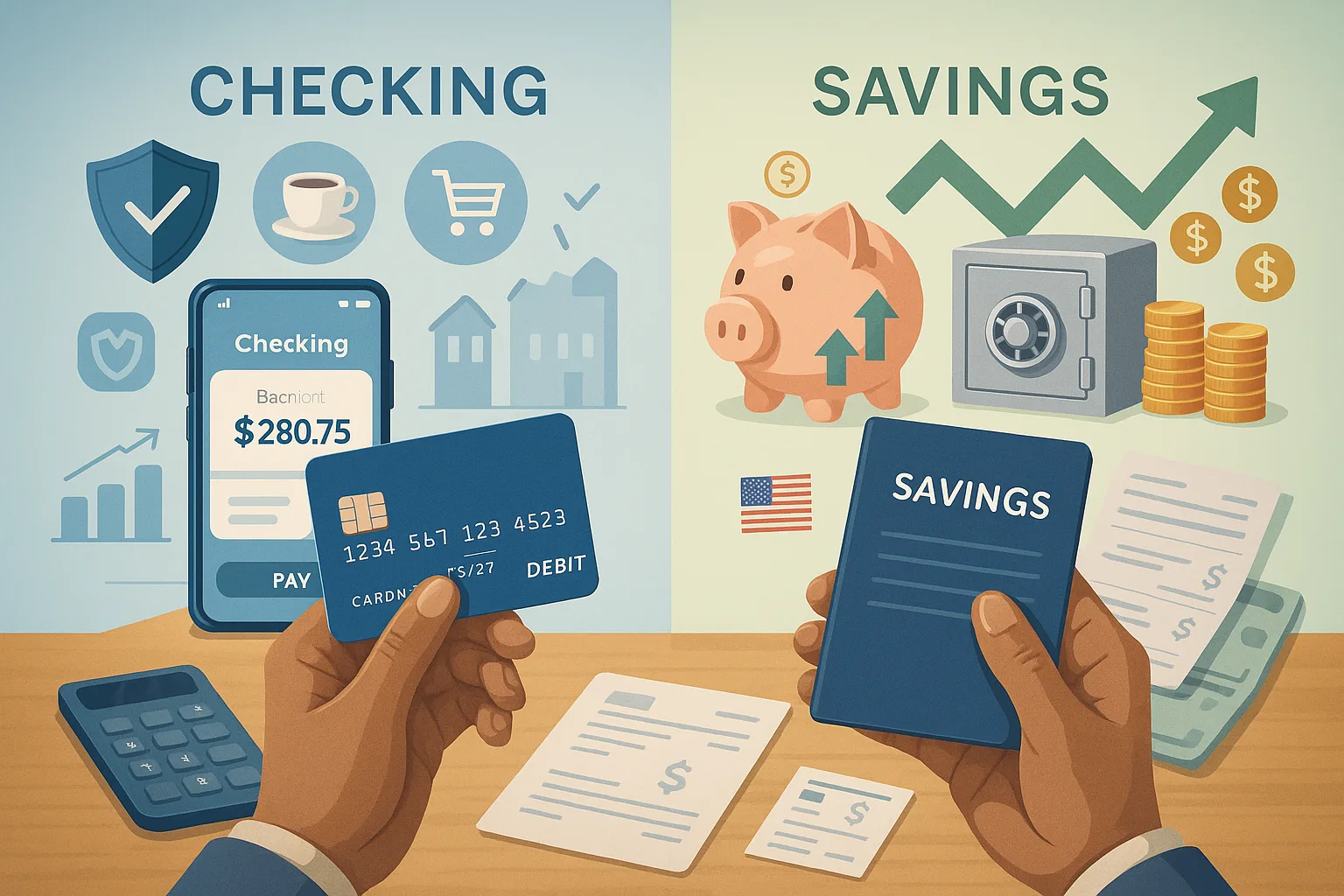
Moving to the United States brings numerous financial challenges, and understanding the banking system is crucial for your success. Many new immigrants struggle with basic questions about American banking, particularly when it comes to choosing between different account types.
Checking vs savings accounts represent the foundation of personal banking in America, yet the differences between them often confuse newcomers. This comprehensive guide will clarify everything you need to know to make informed banking decisions.
By the end of this article, you’ll understand which account to prioritize, how to open your first US bank account, and avoid costly mistakes that many immigrants make. Let’s start building your financial foundation in America today.
What Are Checking and Savings Accounts?
Checking vs Savings Account. Understanding checking vs savings begins with knowing their fundamental purposes in the American banking system. Each account type serves distinct financial needs and offers different benefits for new immigrants.
Checking Account Definition
A checking account functions as your primary transaction hub for daily expenses. Think of it as your financial command center where money flows in and out regularly. You’ll use this account for rent payments, grocery shopping, utility bills, and receiving your paycheck.
Most checking accounts provide a debit card, online banking access, and check-writing privileges. These features make checking accounts essential for participating in the American economy where cash transactions are increasingly rare.
Savings Account Definition
A savings account serves as your money storage facility designed for future goals and emergencies. Banks typically offer higher interest rates on savings accounts compared to checking accounts, helping your money grow over time.
However, savings accounts have transaction limitations. Federal regulations restrict you to six withdrawals per month, encouraging you to leave your money untouched for longer periods.
Key Purpose of Each Account
Checking vs savings purposes differ significantly in daily banking life. Checking accounts prioritize accessibility and convenience for immediate needs. You’ll access these funds multiple times daily without restrictions or penalties.
Savings accounts prioritize growth and security for medium to long-term financial goals. Whether you’re building an emergency fund, saving for a car, or planning a vacation, savings accounts provide a secure place for your money to accumulate interest.
Checking vs Savings: Main Differences
New immigrants often underestimate the importance of understanding checking vs savings account differences. These distinctions directly impact your daily banking experience and long-term financial success in America.
Access and Liquidity
Checking accounts offer unlimited access to your funds through various channels. You can withdraw money from ATMs, make purchases with your debit card, write checks, and transfer money online without restrictions.
Savings accounts limit your transaction frequency to encourage saving behavior. While you can access your money when needed, frequent withdrawals may result in fees or account conversion to checking status.
The liquidity difference between checking vs savings accounts affects how you manage daily expenses versus long-term financial goals. Checking accounts provide immediate access, while savings accounts create a beneficial barrier to impulsive spending.
Interest Rates
Checking vs savings interest rates reveal another crucial distinction for immigrants building wealth in America. Traditional checking accounts typically offer minimal or zero interest on your deposits, focusing instead on transaction convenience.
Savings accounts generally provide higher interest rates, allowing your money to grow passively. High-yield savings accounts can offer significantly better rates than traditional options, potentially earning 20-50 times more than checking accounts.
This interest rate difference makes the checking vs savings decision crucial for maximizing your financial growth potential while maintaining necessary liquidity for daily expenses.
Transaction Limits
Federal Regulation D historically limited savings account withdrawals to six per month, though many banks have relaxed this rule recently. However, understanding these limitations remains important when comparing checking vs savings options.
Checking accounts face no federal transaction limits, allowing unlimited withdrawals, transfers, and purchases. This freedom makes checking accounts ideal for active money management and frequent transactions.
Some banks may impose their own transaction limits or fees for excessive activity, regardless of account type. Always review specific terms when choosing between checking vs savings accounts.
Fees and Requirements
Checking vs savings fee structures vary significantly between banks and account types. Checking accounts often require higher minimum balances to avoid monthly maintenance fees, reflecting their transaction-heavy nature.
Common checking account fees include overdraft charges, ATM fees, and monthly maintenance fees. These costs can quickly accumulate if you don’t understand the terms or maintain required balances.
Savings accounts typically have lower fee structures but may charge for excessive transactions or falling below minimum balance requirements. Understanding these fees helps you choose the most cost-effective checking vs savings combination for your situation.
Checking Accounts for New Immigrants
Checking vs savings priority often favors checking accounts for new immigrants establishing their American financial presence. Your checking account becomes your gateway to participating in the US economy effectively.
Benefits for Daily Banking
Checking accounts enable essential daily activities that cash transactions cannot accommodate. You’ll need a checking account to pay rent, set up automatic utility payments, and receive direct deposit from employers.
Many American businesses prefer electronic payments over cash, making checking accounts virtually mandatory for normal financial participation. Without a checking account, you’ll face significant limitations in housing, employment, and general commerce.
The checking vs savings debate becomes less relevant when considering that checking accounts provide the infrastructure for building your American financial identity and credit history.
Features to Look For
New immigrants should prioritize specific features when selecting checking accounts. Look for accounts with no monthly maintenance fees, extensive ATM networks, and mobile banking capabilities.
Online banking access becomes crucial for managing your finances efficiently and learning American banking practices. Many transactions that require bank visits in other countries can be completed online in the US.
Consider checking accounts that offer overdraft protection, fraud monitoring, and 24/7 customer service. These features provide security and peace of mind as you navigate unfamiliar banking territory.
Best Options for Immigrants
Several banks specifically welcome new immigrants and offer checking accounts with minimal requirements. Credit unions often provide more personalized service and lower fees than traditional banks.
Online banks frequently offer checking accounts with higher interest rates and lower fees than brick-and-mortar institutions. However, ensure they provide adequate ATM access for cash withdrawals when needed.
Some banks accept foreign identification documents and don’t require Social Security numbers immediately, making account opening easier for recent immigrants still obtaining proper documentation.
Savings Accounts for New Immigrants
While checking vs savings priority typically favors checking accounts initially, savings accounts become crucial for long-term financial stability and growth in America.
Building Your Emergency Fund
Financial experts universally recommend maintaining an emergency fund covering 3-6 months of living expenses. A savings account provides the ideal vehicle for building and maintaining this crucial financial safety net.
Emergency funds protect you from unexpected expenses like medical bills, job loss, or major repairs. Having this fund in a savings account ensures availability when needed while earning interest on unused funds.
The checking vs savings decision for emergency funds clearly favors savings accounts due to their growth potential and psychological barrier against unnecessary spending.
Interest Earning Potential
Savings accounts help combat inflation by earning interest on your deposits. Even modest interest rates can significantly impact your wealth accumulation over time, especially for consistent savers.
Compound interest works in your favor when you leave money untouched in savings accounts. The longer your money remains deposited, the more dramatically your balance can grow through compounding effects.
Checking vs savings interest potential strongly favors savings accounts for any money you don’t need immediate access to, making them essential for building wealth in America.
High-Yield vs Traditional Savings
High-yield savings accounts offer significantly better interest rates than traditional savings options, sometimes providing 10-50 times higher returns on your deposits.
Online banks typically offer the highest interest rates on savings accounts due to lower operational costs. These accounts function identically to traditional savings but provide better growth potential.
When comparing checking vs savings options, consider high-yield savings accounts for maximum benefit from money you’re setting aside for future goals or emergencies.
Which Account Should You Open First?
The checking vs savings priority question has a clear answer for most new immigrants: open a checking account first to establish your basic banking infrastructure.
Priority for New Immigrants
Checking accounts enable fundamental financial activities like receiving paychecks, paying bills, and making purchases. Without a checking account, you’ll struggle to participate normally in American economic life.
Most employers prefer or require direct deposit, making checking accounts essential for employment. Additionally, many services like utilities, rent, and insurance require electronic payment methods that checking accounts provide.
The checking vs savings debate becomes academic if you can’t perform basic financial transactions, making checking accounts the clear initial priority for new immigrants.
Timeline for Opening Both
Plan to open a checking account within your first month in America, followed by a savings account once you’ve established steady income and understand your monthly expenses.
Most financial advisors recommend waiting 2-3 months after opening your checking account before adding a savings account. This timeline allows you to understand your cash flow patterns and identify money available for saving.
The checking vs savings timeline approach ensures you meet immediate needs first while building toward long-term financial goals systematically.
Special Considerations
Some banks offer package deals combining checking and savings accounts with reduced fees or minimum balance requirements. These packages can provide cost savings and simplified banking relationships.
Consider your home country’s banking relationships when choosing US accounts. Some international banks have US partnerships that can simplify the account opening process and provide better terms.
Immigration status may affect available account options, but most banks accept various forms of legal documentation. Research banks known for working with immigrants to ensure smooth account opening processes.
How to Open Your First US Bank Account
Understanding the account opening process helps you navigate checking vs savings decisions more effectively and avoid common obstacles that delay new immigrants.
Required Documents for Immigrants
Banks typically require two forms of identification for account opening. Acceptable documents include passports, driver’s licenses, state ID cards, and employment authorization documents.
You’ll also need proof of address, which can include utility bills, lease agreements, or official mail addressed to your US residence. Some banks accept hotel receipts or employer letters for very recent immigrants.
Social Security numbers are preferred but not always required immediately. Many banks allow account opening with Individual Taxpayer Identification Numbers (ITIN) or promise to provide SSN within a reasonable timeframe.
Step-by-Step Process
Begin by researching banks and comparing checking vs savings options online before visiting branches. This preparation saves time and helps you ask informed questions during your visit.
Schedule appointments at 2-3 banks to compare terms and find the most immigrant-friendly institution. Bring all required documents and be prepared to make initial deposits to fund your new accounts.
Complete all paperwork carefully and ask questions about any terms you don’t understand. Banks are required to provide clear explanations of account features, fees, and requirements.
Banks That Welcome Immigrants
Several major banks have programs specifically designed for new immigrants, offering simplified account opening processes and educational resources about American banking.
Credit unions often provide more personalized service and may be more flexible with documentation requirements. Research local credit unions that serve immigrant communities in your area.
Online banks can offer excellent options for tech-savvy immigrants comfortable with digital banking. These institutions often provide competitive rates and lower fees than traditional banks.
Common Mistakes to Avoid
New immigrants often make costly errors when navigating checking vs savings decisions and general banking practices in America. Learning from these common mistakes can save you significant money and frustration.
Account Fee Traps
Many immigrants underestimate the impact of banking fees on their financial health. Monthly maintenance fees, overdraft charges, and ATM fees can quickly accumulate to hundreds of dollars annually.
Always understand minimum balance requirements and fee structures before opening accounts. Some banks waive fees with direct deposit, minimum balances, or combined account relationships.
The checking vs savings fee comparison should include all potential charges, not just monthly maintenance fees. Hidden costs can make seemingly attractive accounts expensive over time.
Minimum Balance Issues
Falling below minimum balance requirements triggers fees that can quickly erode your account value. These requirements often differ between checking vs savings accounts at the same bank.
Set up account alerts to notify you when balances approach minimum thresholds. Most banks offer email or text notifications that can prevent costly fee assessments.
Consider accounts with low or no minimum balance requirements while you establish steady income and understand your financial patterns in America.
Understanding Terms and Conditions
Bank terms and conditions contain crucial information about fees, interest rates, and account limitations. Many immigrants skip reading these documents and face unexpected charges later.
Pay special attention to overdraft policies, transaction limits, and fee schedules. These terms directly impact your daily banking experience and long-term costs.
When comparing checking vs savings options, ensure you understand how each account type fits your financial needs and usage patterns to avoid costly mismatches.
Conclusion
Checking vs savings accounts serve different but complementary roles in your American financial journey. Checking accounts provide the infrastructure for daily transactions and economic participation, while savings accounts offer growth potential and emergency fund security.
New immigrants should prioritize opening a checking account first to establish basic banking relationships and enable essential financial activities. Follow this with a savings account once you understand your income and expense patterns.
Success with both account types requires understanding their differences, choosing banks that welcome immigrants, and avoiding common fee traps that can drain your hard-earned money. Take time to research options, compare terms, and ask questions before making decisions.
Your banking choices today will impact your financial success throughout your American journey. Start with a solid checking account foundation, add savings capability for growth, and build the financial stability that makes your immigration dreams achievable.
Ready to open your first US bank account? Research immigrant-friendly banks in your area, gather required documents, and take the first step toward American financial independence today.

My name is CAPRA CHRINO, and I am an enthusiast of the online universe. Since a very young age, I have been fascinated by the way the internet connects people, ideas, and opportunities.